Network
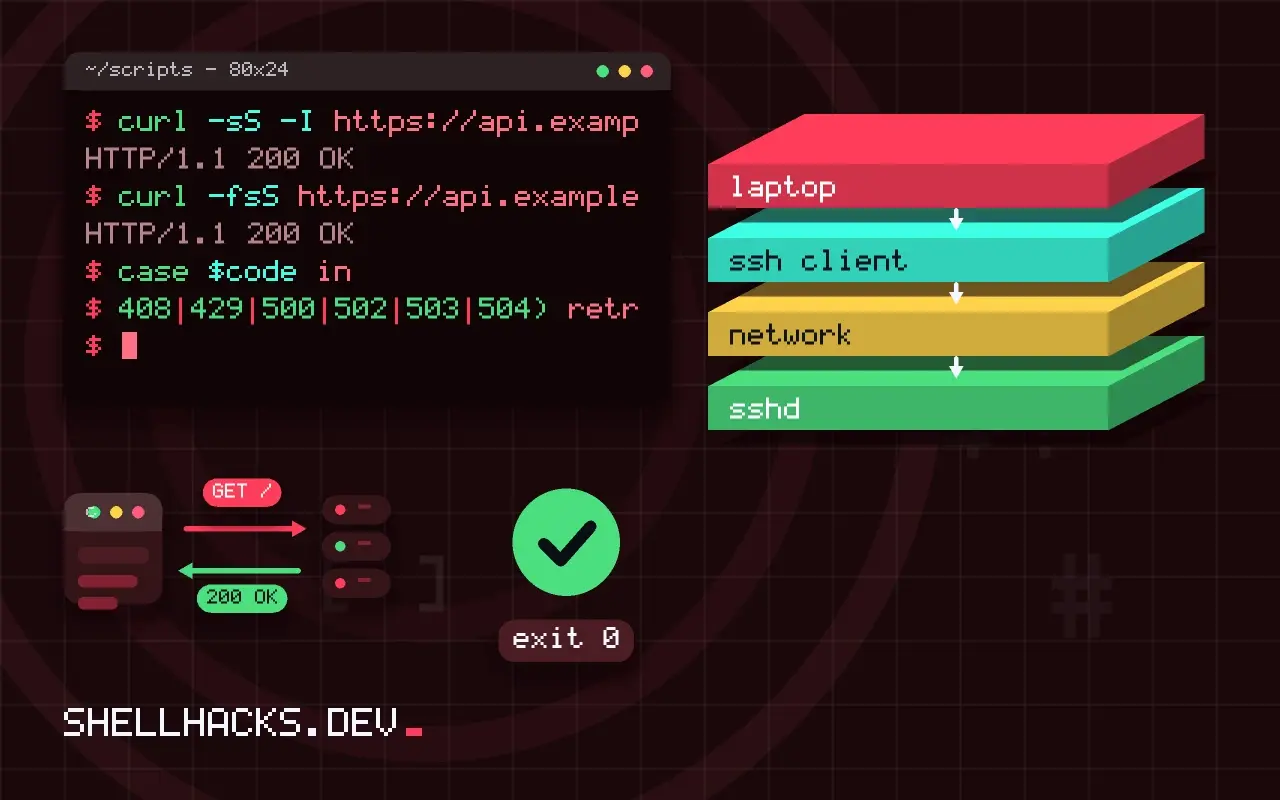
What Are HTTP Status Codes Developers Actually Meet
The HTTP status codes developers actually meet, grouped by meaning, with what scripts should do for each, retries, redirects and curl options.
6 min read
SSH, curl, DNS, ports and HTTP APIs from the terminal, for when a connection or a request will not behave.
The HTTP status codes developers actually meet, grouped by meaning, with what scripts should do for each, retries, redirects and curl options.
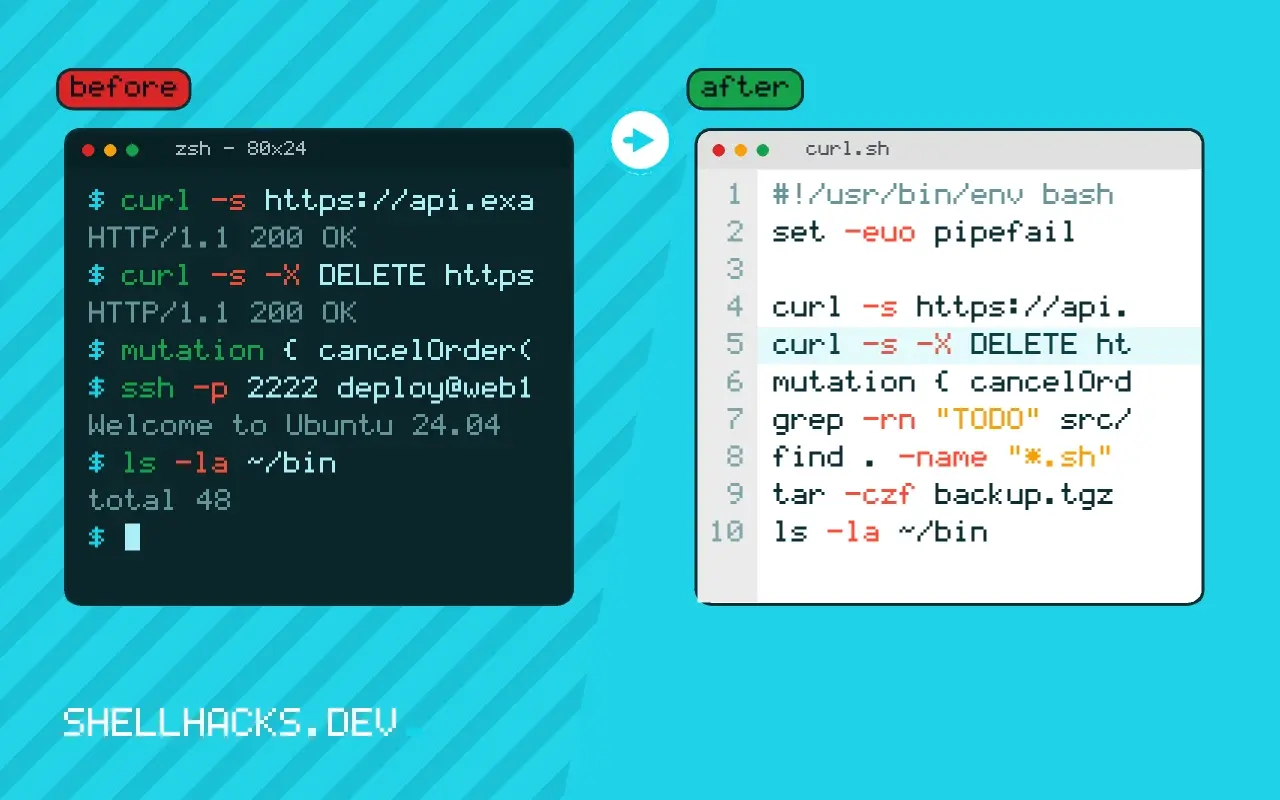
REST, RPC and GraphQL compared: resources versus actions versus queries, caching, versioning, tooling with curl, error handling and how to choose.
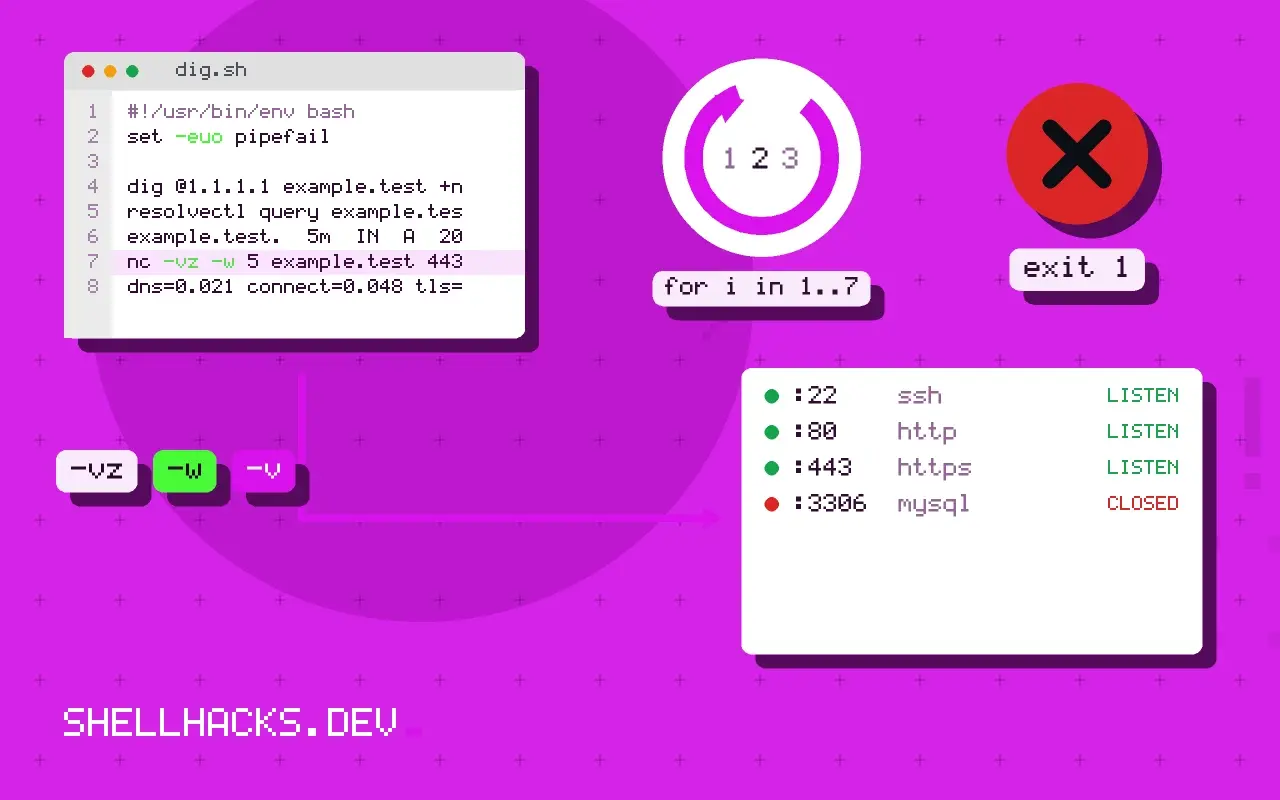
Debug DNS and TLS problems from the terminal: dig, getent and resolvectl for names, openssl s_client and curl -v for handshakes, with a layered approach.
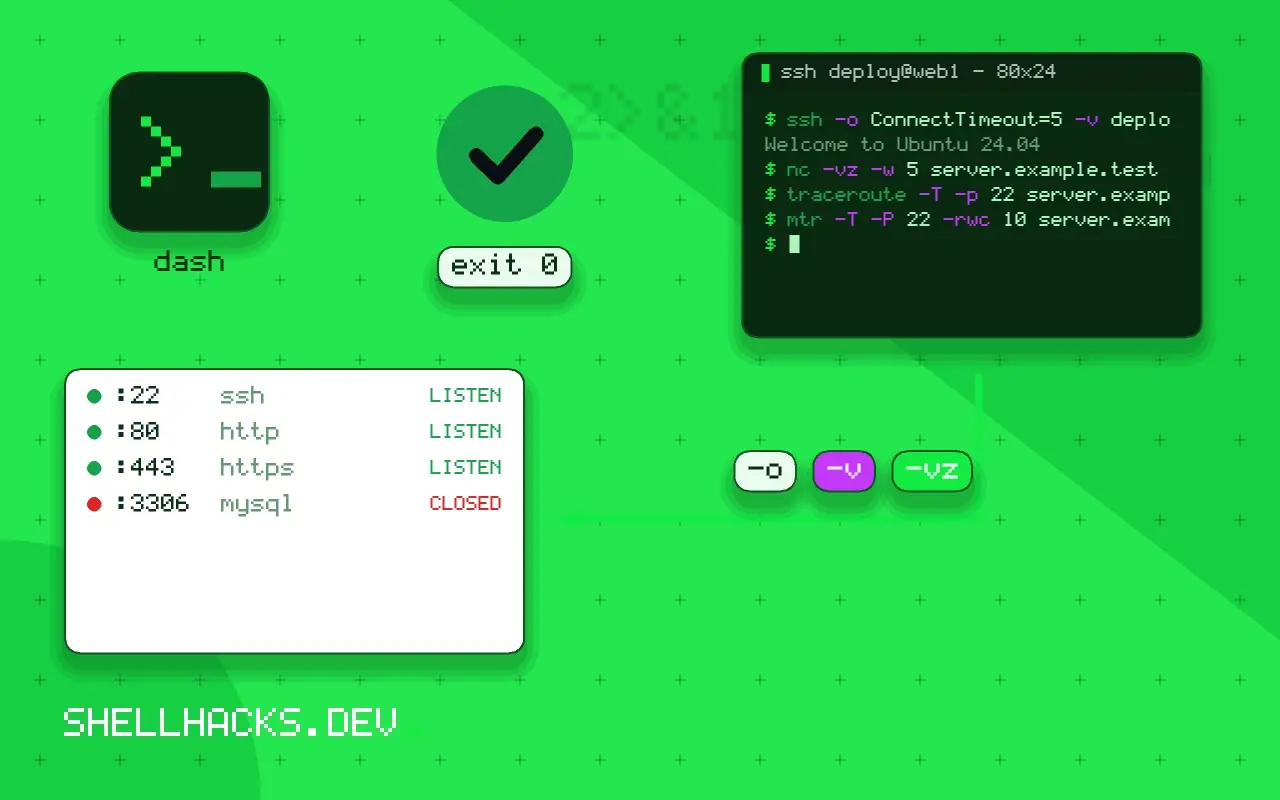
Fix SSH Connection timed out: tell it from refused, trace the path with nc and traceroute, check firewalls and security groups, and set ConnectTimeout.
Fix SSH connection refused: confirm sshd is running and listening, the port and address, firewall rules, and how it differs from a timeout.
Fix SSH Permission denied (publickey): read ssh -v output, check the key, the agent, file permissions on both sides, the user name and sshd logs.
Fix SSH subsystem request failed on channel 0 with sftp or scp: a missing Subsystem line, wrong sftp-server path, shell startup output and chroots.
Retry curl requests safely with --retry flags, respect 429 and Retry-After, add backoff and jitter, throttle requests, and avoid repeating unsafe calls.
Call APIs from shell scripts with curl and handle errors properly: fail flags, status codes, timeouts, jq parsing and a request function.
Build a tiny JSON API in Python or Go for scripts and tests: a few routes, JSON in and out, status codes, a fake backend and safe local binding.
Keep API keys out of scripts and repositories: env files, secret managers, scanning for leaks, narrow scopes and what to do after a key escapes.
An SSH guide from first login to a hardened, scripted setup: keys, config files, agents, tunnels, jump hosts, sshd hardening, automation and troubleshooting.
One email when a new post is published. No spam.